Tech Lane Ghent Science Park hosts a world-leading concentration of silicon-photonics, artificial-intelligence, high-speed communication and imaging research built around UGent and imec, numerous digital tech startups & multinationals working together using core facilities like cleanrooms & piloting & testing infrastructure.
Research
Silicon & integrated photonics
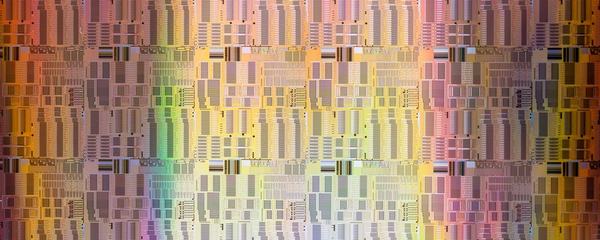
The Photonics Research Group (UGent-imec) designs optical chips that move and process data using light instead of electrons. CMOS-compatible silicon and silicon-nitride circuits make optics low-cost and low-power — the backbone of faster internet, AI data-centre interconnects and compact sensors. The group holds an exceptional seven ERC grants, anchoring Europe's photonics leadership.
More info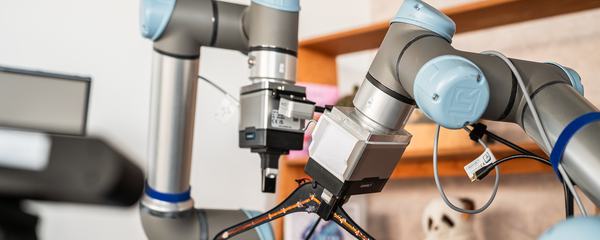
Trustworthy & hybrid AI
Ghent University has a strong tradition in artificial intelligence and data science related research. Many research teams are working on foundational aspects of AI and are applying the latest AI techniques in a wide range of application areas. In total this accounts for about 50 professors, 50 post docs and 200 PhD students and it results in collaboration with over 300 local and international companies
More info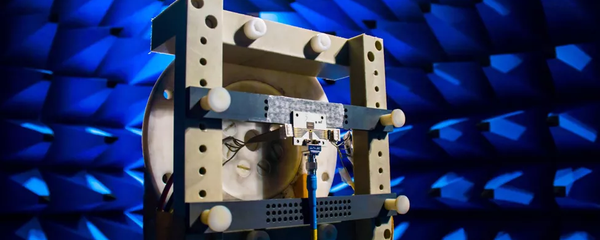
Extreme communication technologies
Researchers push wireless and optical communication to its physical limits — 6G, cell-free massive MIMO, sub-terahertz links and ultra-fast optical transceivers. These advances underpin future mobile networks, satellite connectivity and the bandwidth that AI and the connected economy demand.
More info
Imaging, sensor fusion & scanning
The IPI group fuses cameras, radar, LiDAR and thermal and hyperspectral sensors into systems that perceive the world reliably. Applications include safer self-driving vehicles, maritime safety, medical imaging and industrial inspection — turning raw sensor data into decisions that protect people and assets.
More infoImpact

Axithra — getting the antibiotic dose right
Built on UGent's “Raman-on-chip” photonic sensing, Axithra (2023) measures drug concentrations in blood quickly and accurately, starting with beta-lactam antibiotics. In intensive care the correct dose can mean cure rather than toxicity. The spin-off raised a €10M seed round led by imec.xpand and Kurma Partners.
More info
Indigo Diabetes — an invisible continuous sensor
Drawing on UGent/imec nanophotonics, Indigo miniaturised spectroscopy onto a single implantable chip that senses glucose and ketones continuously, without needles or recalibration. It is a calibration-free alternative to today's wearables and has raised a €7M Series A and €38M Series B.
More info
TechWolf — an AI Skill Engine for the workforce
This 2018 UGent/Cambridge spin-off - in October 2026 acquired by SAP - reads data from a company's everyday work tools to build a live map of every employee's skills. It helps large firms such as Workday, HSBC, GSK and Booking.com with reskilling and internal mobility, showcasing the cluster's applied-AI strength
More info
Sentea — photonics that watch over infrastructure
A decade of silicon-photonics and fibre-sensing research produced affordable optical “interrogators” that read glass-fibre sensors. They enable continuous structural-health monitoring of bridges, buildings and wind turbines — highly relevant to the Ostend offshore-wind ecosystem.
More infoGhent University has created more than 170 spin-offs translating research into impact. Check out https://techtransfer.ugent.be/en
Core facilities

Silicon-photonics & CMOS fabrication
We have access to imec's CMOS-compatible silicon-photonics line and EU Chips Act pilot line let companies prototype and scale optical chips on 200/300 mm wafers. The IC-Link service routes designs to volume manufacturing — a near-unique route from idea to industrial photonic product.
More info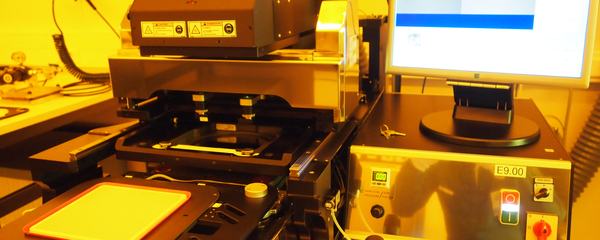
Nano- and microfabrication of optical devices & microsystems
Discover Ghent University’s state-of-the-art clean room infrastructure for nano- and microfabrication, enabling research and testing across multiple domains, giving start-ups and corporates a place to build working prototypes without owning a fab.
More info